Innovation
01
Claude Monet
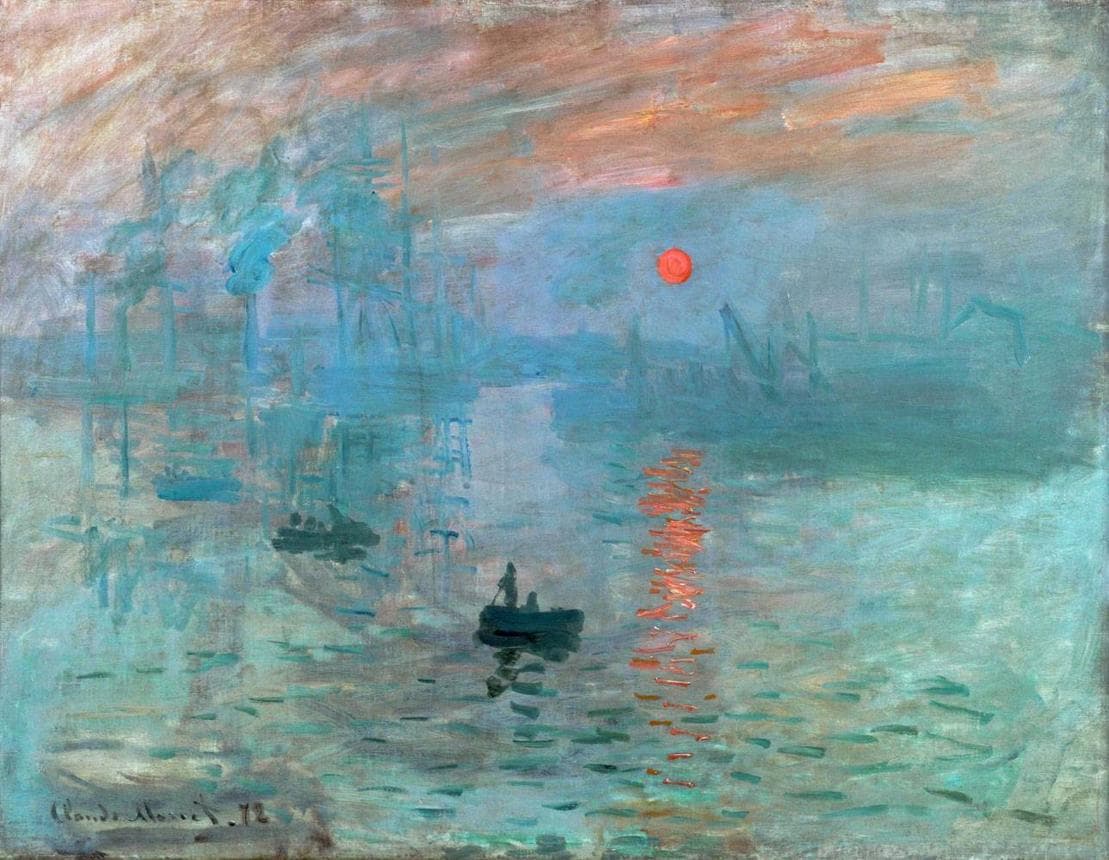
Impression, Sunrise
Wikimedia Commons · Public domainManagement thinking model
Innovation begins with a new way of seeing, not a new technology.
The Philosophy Beneath The Work
Art expands perception, interrupts familiar interpretations and makes relationships visible before they become measurable.
The Philosophy Beneath The Convictions
Art does not provide management answers. It expands perception, interrupts familiar interpretations and makes relationships visible before they become measurable.
Reality is not static
Claude Monet captured this insight in Impression, Sunrise. He did not paint the harbour as an objective scene. He painted a fleeting moment as it was experienced: the horizon uncertain, the outlines incomplete, and yet a new day already beginning.
Organizations, markets and societies do not present leaders with one fixed reality. They are constantly evolving systems, perceived differently depending on perspective, timing and context. Leadership is therefore not about discovering a fixed reality. It is about recognizing the patterns that matter, interpreting what is beginning to emerge and creating direction before the future becomes obvious.
Transformation unfolds in much the same way. It begins not with certainty, but with a different way of seeing.
Art as management thinking model
Art does not provide management answers. It asks better questions, expands perspective and makes relationships visible before they become measurable. Great art and great leadership share an essential quality: both can change the way people see the world. The Art of Transformation is therefore a way of approaching complexity with attention, interpretation and judgment, not an illustration, but a thinking model.
Why art, not another framework
Trained to decide fast, executives usually look for answers too quickly, reaching for the framework, the precedent, the fix that worked before it has fully understood what it is looking at. Over time, managers become trapped in their own mental models: the very patterns of thinking that made them successful start to filter out what doesn't fit.
The result is a familiar executive paradox. Leaders often become better at solving familiar problems, and worse at seeing problems differently.
Art interrupts these patterns. It changes perception before it asks for a conclusion.
Artists live inside the same facts as everyone else, yet they routinely notice connections and possibilities that go unseen by people looking at the identical picture. That is not a talent reserved for the studio, it is a capability, and it is exactly what separates a leader who reaches for the familiar answer from one who finds a genuinely different one. Deliberately putting an executive team in front of art is not indulgence. It is training the same muscle a transformation eventually demands: the willingness to keep looking past the obvious answer.
From object to experience
Artists such as Michelangelo Pistoletto spent decades dissolving the line between the artwork and the encounter with it, what the piece is made of matters less than what happens when someone stands in front of it. Every manager should understand what artists already know: a brand is not what you say about yourself, it is how you are perceived. A product or a service does not really exist for the market until it is experienced.
The same is true inside an organization. A new operating model, a new strategy, a new capability does not exist for the people living inside it until it is experienced, in a decision made differently, a meeting run differently, a customer interaction that feels different.
Leaders who treat transformation as an object to be delivered, a chart, a document, a go-live date, miss the opportunity every artist already understands. An organization is not judged on what was built. It is judged on how it was lived.
Irises · transformation as a living system
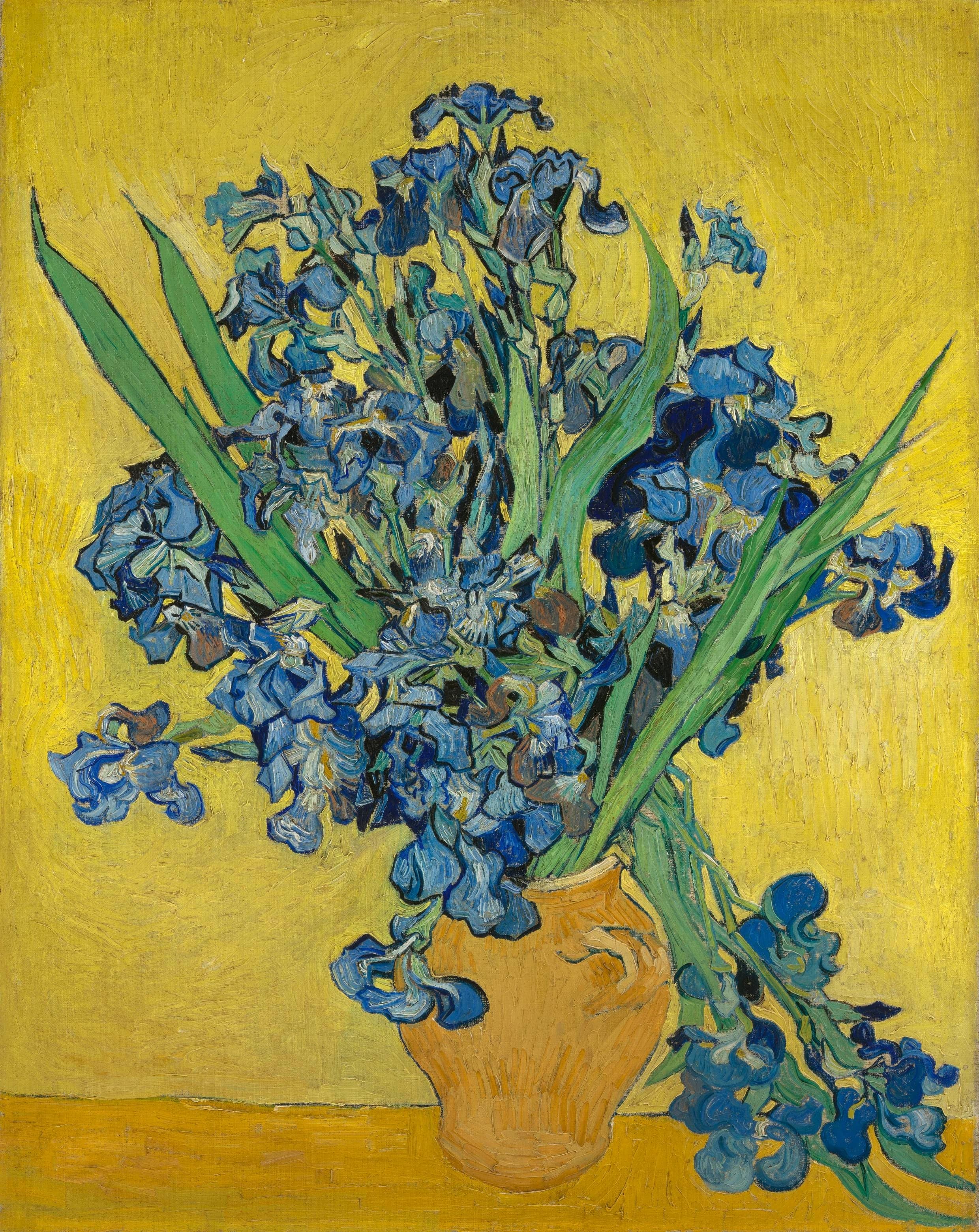
Van Gogh's irises are not uniform. They occupy different stages of development and form a field without a single visible centre. Their vitality depends on relationships and on conditions that remain largely invisible.
Organizations are similar. In every transformation, early adopters, sceptics, experts, new employees and old routines coexist. Transformation does not mean moving everyone at the same pace. It means intelligently orchestrating different levels of maturity.
The visible elements are projects, targets and KPIs. The less visible elements, culture, trust, relationships, motivation and meaning, often determine whether change is sustained. The Strategic Mobilization Partner therefore acts less like a project manager pulling at the leaves and more like a gardener improving the conditions in which the system can grow. Because the Strategic Mobilization Partner holds no organizational authority, they can surface what those inside the hierarchy have been unable to say out loud.
Management perception shift through art
The artworks are not illustrations of management concepts. They are thinking models that challenge executives to reconsider their role in transformation.
Every artist starts from a tradition, technique, form, history, the same way every executive inherits a playbook, a culture, an established way of operating. Mastering that inheritance was never the point; what defines a body of work is where the artist departs from it, into territory the tradition doesn't cover. Leadership works the same way: a plan rooted in what has worked before, held loosely enough to improvise the moment reality moves past the plan.
From Controlling outcomes
To Creating conditions
Across Irises, Wanderer above the Sea of Fog, Mondrian's compositions and Hokusai's wave, the recurring insight is the same: leaders cannot directly control a complex system. They can shape the conditions under which it evolves, direction, boundaries, resources, feedback, rather than assume a decision at the top automatically produces the intended behavior throughout the organization.
From Expecting uniformity
To Tolerating different speeds
Van Gogh's irises develop asynchronously, early adopters and sceptics, emerging capabilities and established routines, experimentation and resistance, all at once. That is not a deficiency to correct. It is the normal condition of a living organization. Alignment does not require uniformity; it means different contributions stay connected to a shared purpose.
From Having answers
To Providing orientation under uncertainty
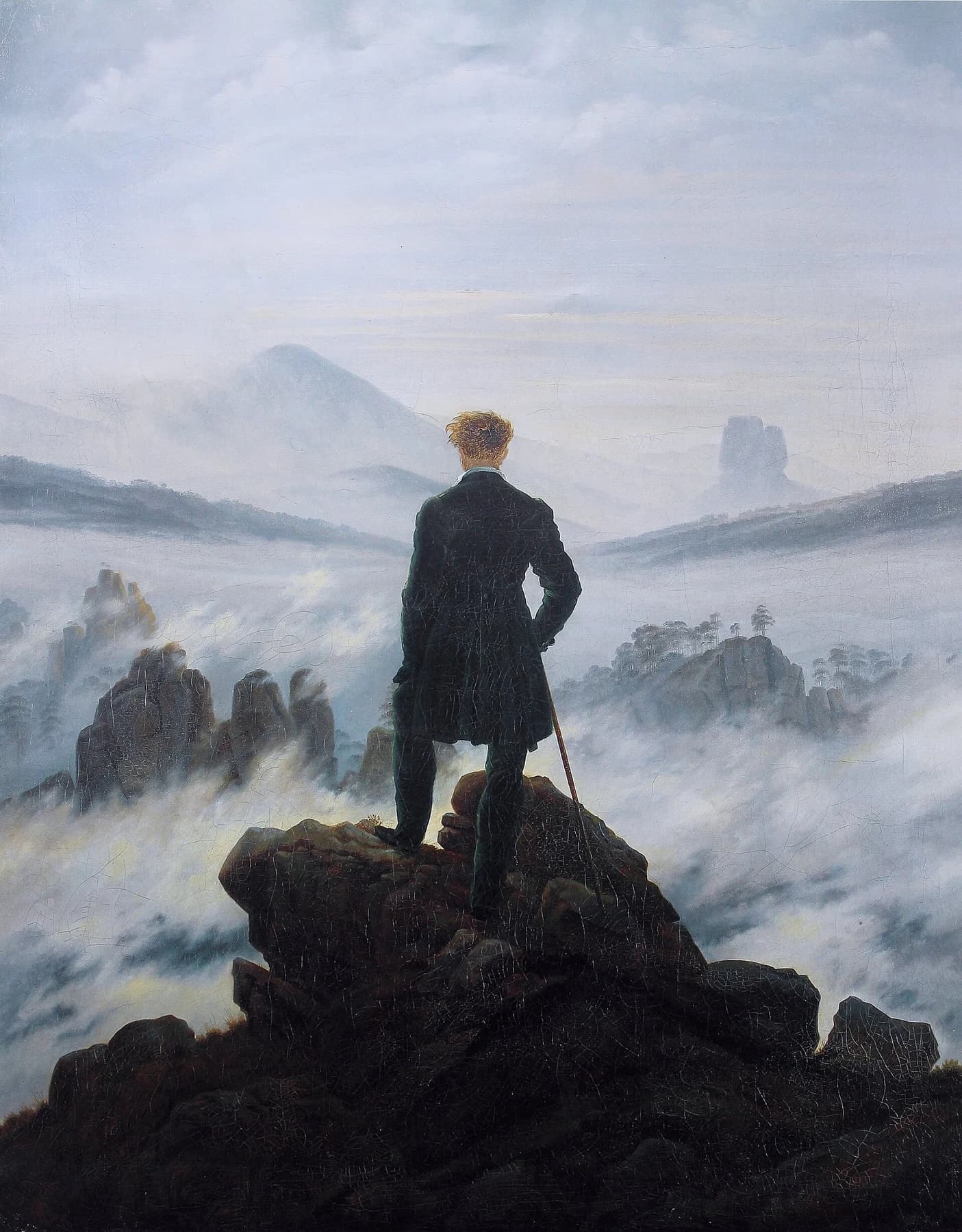
In Wanderer above the Sea of Fog, the landscape is only partially visible. Leadership similarly requires providing direction without possessing a complete map, not eliminating uncertainty, but making purposeful action possible within it.
From Managing deviation
To Orchestrating difference
Difference and asynchronicity are sources of learning and adaptation, not simply risks to manage away. But diversity is not productive by itself, without shared purpose and clear boundaries, it becomes fragmentation. The leadership task is to orchestrate difference, not to control every contribution or let everything happen.
The four practices for managers
Before reacting to projects and KPIs, examine the conditions beneath them: culture, trust, relationships, meaning, identity and informal power. Visible performance is often the consequence of these underlying conditions.
Most transformation programs are structured as events: a wave is launched, a milestone is reached, the program closes. The organizational ecosystem doesn't work that way. Rather than repeatedly replacing individual flowers when they fail, cultivate the conditions continuously, observing, learning, adjusting and reinforcing on a fixed rhythm rather than only when performance becomes impossible to ignore.
Following the Kandinsky principle, look for relationships, rhythms, tensions and recurring structures before responding to individual signals, particularly important where more AI-generated data does not automatically create better understanding.
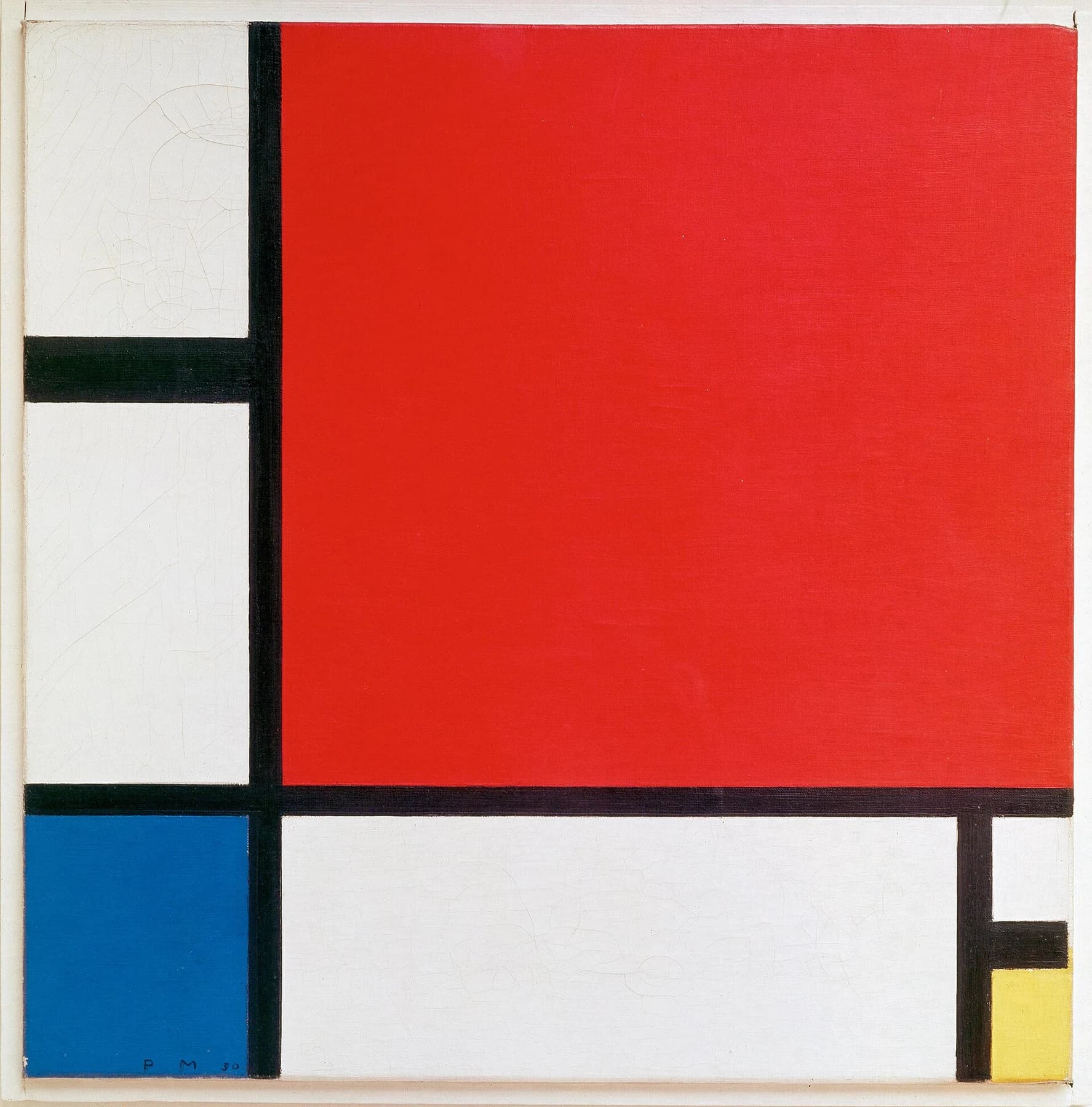
Mondrian demonstrates how clarity can emerge through structure and reduction without eliminating difference. Good strategy establishes a coherent structure within which differentiated action remains possible, not by making every unit, team or person identical.
The discipline
The perception shifts above require more than individual insight, they require an organizational operating system. SITT (See, Interpret, Translate, Transform) is the management discipline MANREAU built for continuous transformation. It activates the distributed capability already inside the organization and connects operational intelligence to strategic direction, so that change becomes a durable capacity rather than a series of programmes.
SITT reverses the standard transformation logic: rather than treating people as recipients of change, it places human perception and judgment at the center of how transformation is organized.
The capability
Culture is not behavior, and it is not mission statements. It is the organization's capacity to see, interpret and form judgment together, the capability from which behavior and values are downstream. In an era where AI generates more analysis than any team can process, this capacity for coherent collective judgment is what separates organizations that act wisely from those that merely react fast.
This capability is built deliberately, through structure and repeated practice, not through good intentions or a single leadership offsite.
The quintessence
Alignment does not mean that everyone thinks the same way, develops at the same speed or takes identical action. Alignment means that different contributions remain connected to a shared purpose.
Effective leadership does not master transformation by forcing people toward a uniform target state. It creates clarity, trust and productive boundaries within which diversity can become coordinated development. Leadership does not design the individual flowers. It cultivates the ecosystem in which different flowers can grow and contribute to a coherent whole.
Most transformation programs are designed to close. The model here is designed to run , because the conditions that require transformation don't stop when the program does.
MANREAU translates this philosophy into organizational practice, the operating model, capabilities, cadence and deliberately lighter ongoing involvement through which leaders create the conditions for continuous, measurable transformation.
The Gallery Of Transformation
Instead of interchangeable stock photography, each major theme across the site is anchored to a significant, public-domain artwork, not as decoration, but as a recurring visual language for the management principle it represents.
Innovation
01
Impression, Sunrise
Wikimedia Commons · Public domainManagement thinking model
Innovation begins with a new way of seeing, not a new technology.
Transformation
02
Irises
Wikimedia Commons · Public domainManagement thinking model
Transformation as organic growth, strength through diversity, not uniformity.
Leadership
03
Wanderer above the Sea of Fog
Wikimedia Commons · Public domainManagement thinking model
Leadership means providing orientation in uncertainty, not having every answer.
Strategy
04
Composition with Red, Blue and Yellow
Wikimedia Commons · Public domainManagement thinking model
Strategy reduces complexity and creates clarity, without destroying diversity.
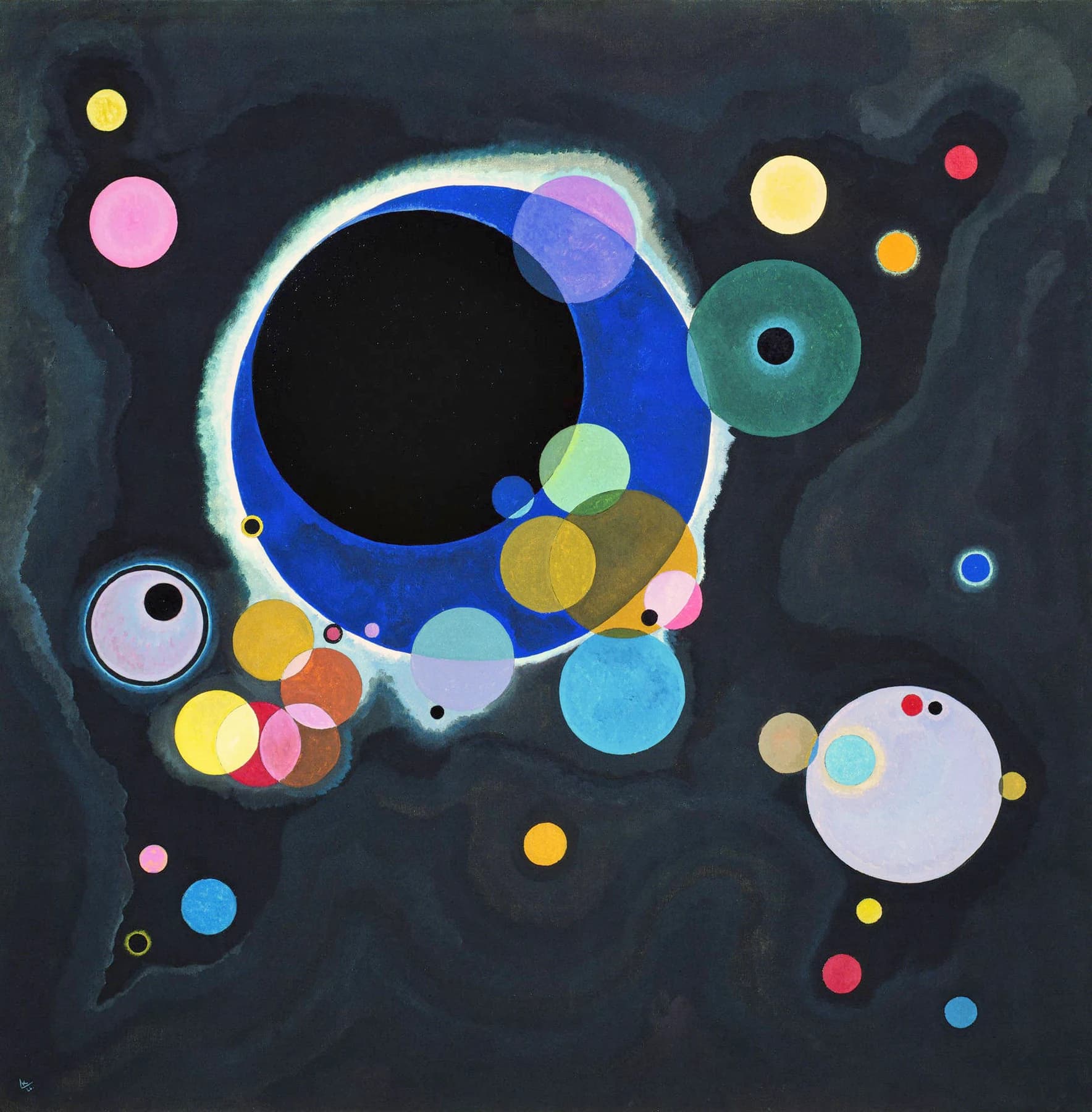
AI & Complexity
05
Several Circles
Wikimedia Commons · Public domainManagement thinking model
Recognizing patterns, not reacting to single events, is what AI should extend.
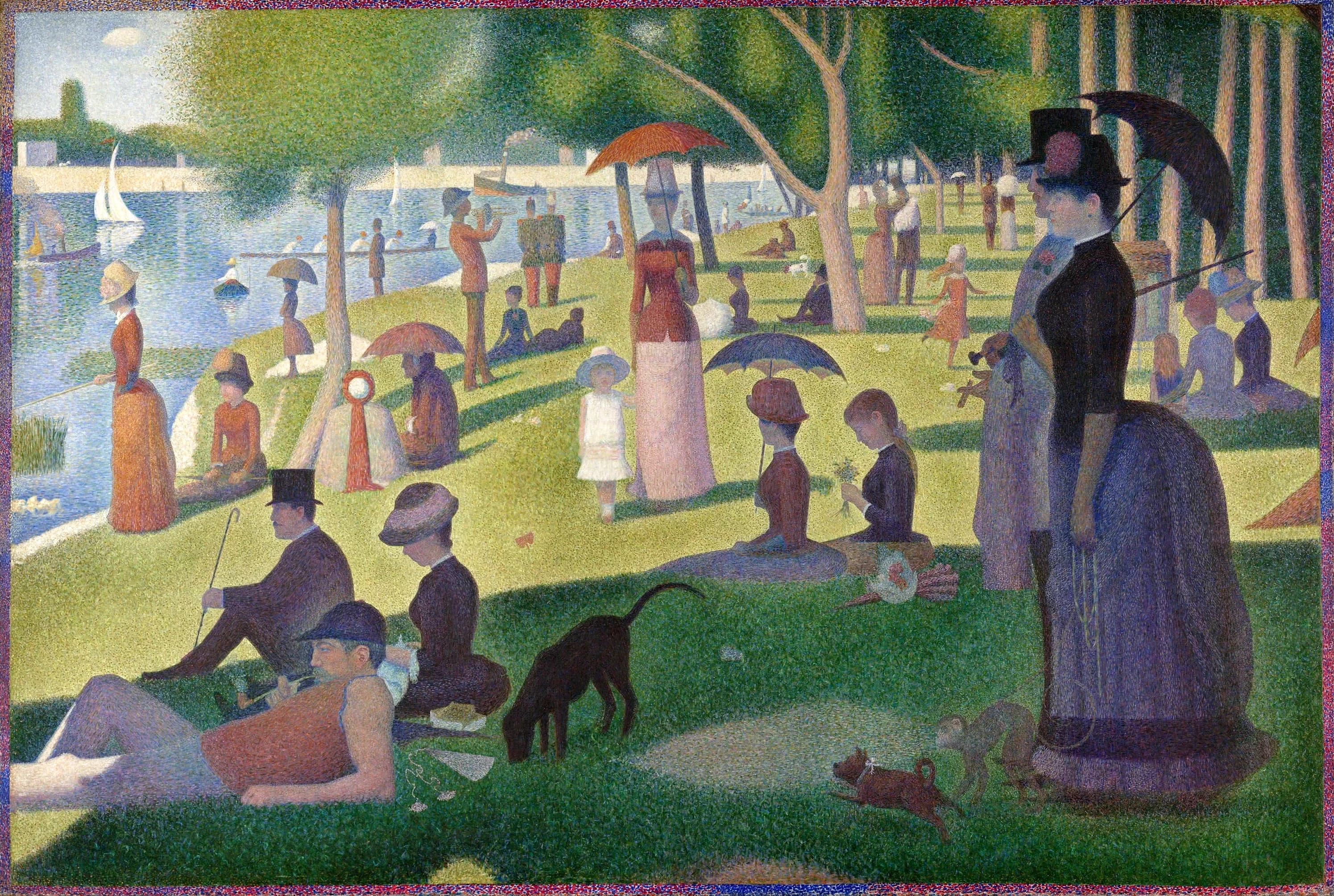
Culture
06
A Sunday Afternoon on the Island of La Grande Jatte
Wikimedia Commons · Public domainManagement thinking model
Culture is made from thousands of daily actions, not mission statements.
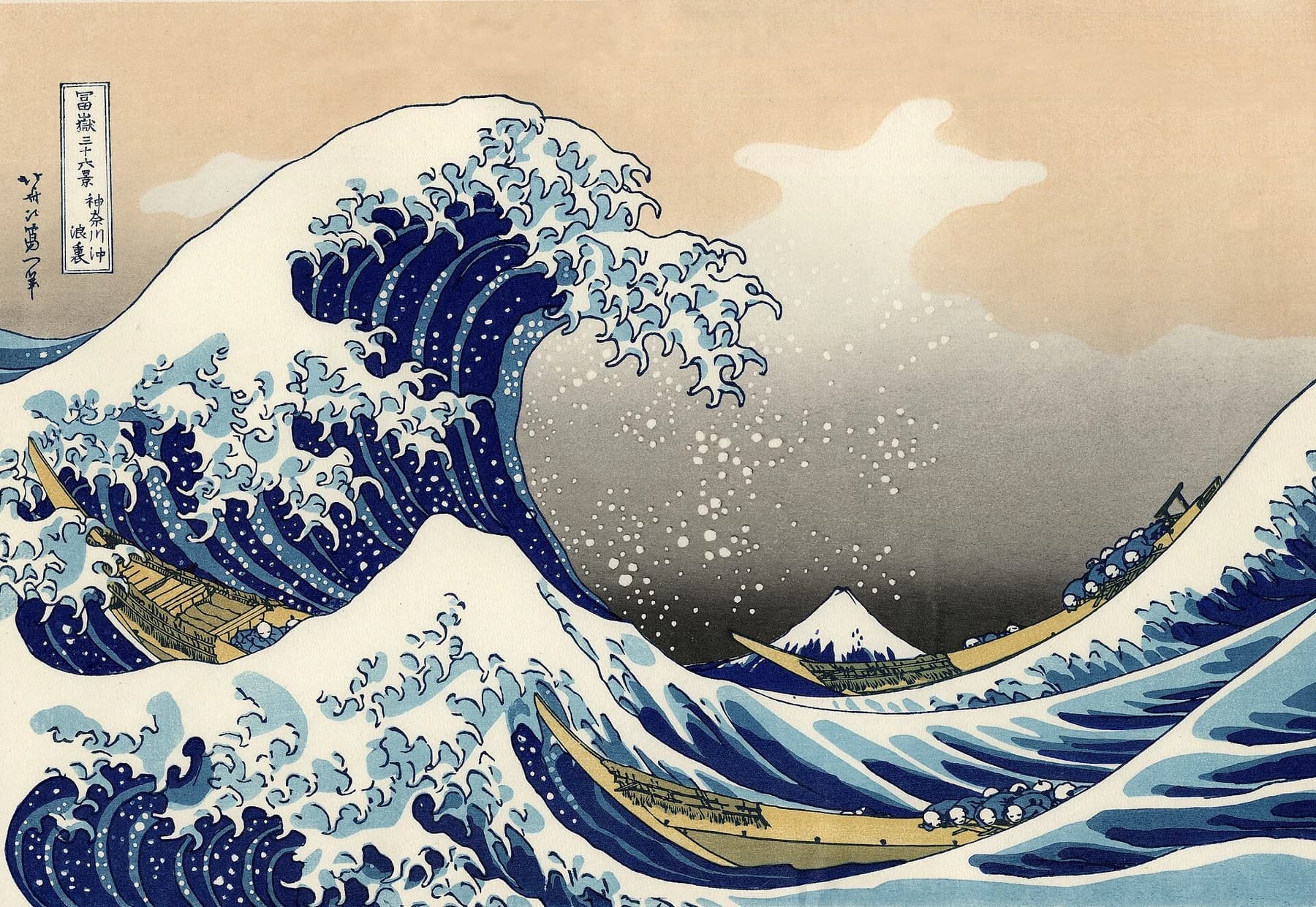
Sustainability
07
The Great Wave off Kanagawa
Wikimedia Commons · Public domainManagement thinking model
Organizations must learn to work with forces larger than themselves.
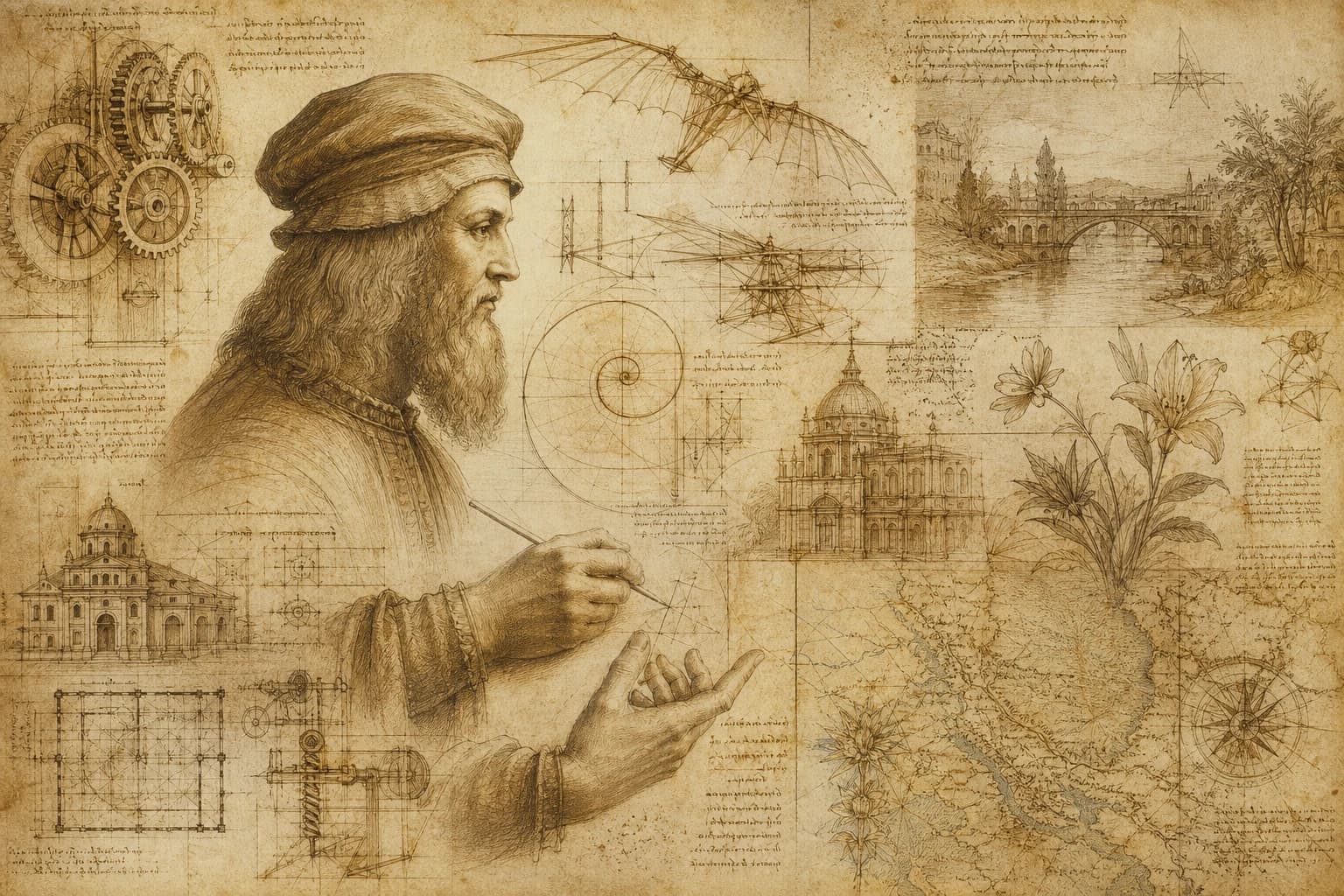
Excellence
08
Notebook Studies, Editorial Montage
Original editorial montage · Inspired by public-domain studiesManagement thinking model
Excellence lives at the intersection of science, creativity and craft.
Begin With Your Situation
When seeing differently is essential to changing what the organization can do.
A Strategic Mobilization Partner leads the initial executive conversation. Industry and Domain Experts join only when the situation calls for their specific depth.