The MANREAU Transformation Operating System (TOS)

7 Elements.One MANREAU System.Built Where Transformations Fail.

Each of the seven elements addresses a distinct point where transformations repeatedly lose force. Together, they form three connected layers that operate as one system, not as independent tools.

The Operating Core: SITT, CADENCE and LEDGER. SITT turns different realities into collective judgment and coherent action. CADENCE puts that judgment into a recurring operating rhythm. LEDGER carries it from strategic intent to Finance-confirmed, Booked and Sustained Value.

The Intelligence Layer: TEMPER, TERRAIN and TIA. TEMPER makes transformation capacity visible. TERRAIN tests possible futures. TIA preserves evidence, decisions and organizational learning across successive rhythms.

The Capability Layer: FORGE. FORGE develops the distributed leadership capacity required to operate and sustain the system through successive transformations.

Whether the transformation involves a new operating model, AI-enabled work or a different source of value, the same system carries it and grows stronger with every rhythm your organization runs.
What TOS Is

The System In Which All Transformation Initiatives Operate.

Every organization already has a Transformation Operating System: the wider system through which transformation ambitions are formed, translated, resourced, negotiated, executed and adapted.

It connects direction, delivery and operations. It shapes what leadership sees, how the organization forms judgment and whether decisions become coherent action. It is always present. It is rarely managed deliberately.

The Transformation Operating System is not another program, governance body or transformation office. It is the operating logic connecting leadership intent with the organization's capacity to transform.

Culture is not separate from this system. It governs what people can see, how they form judgment, what they can credibly commit to and how they act together. But the Transformation Operating System is not reducible to culture. It also connects direction, delivery and operations through authority, resources, cadence, evidence, value and learning. Culture shapes how the system operates, and repeated use of the system shapes culture in return.

MANREAU makes the Transformation Operating System visible and steerable. Not as another layer of governance, but as the organizational capacity to reconcile ambition, evidence, authority and resources continuously.

Each of the seven elements addresses a distinct point where transformations repeatedly lose force. Together, they form three connected layers that operate as one system, not as independent tools.

Strategic Mobilization puts the Transformation Operating System in motion. It moves strategic intent through the organization, into operations and onto the books.

The Seven Elements

Explore The System.Enter Where You Need Depth.

Each element has a distinct role. Move through the seven concise views, then enter the detail page when you need the complete explanation.

How The System Works As One

Seven Elements. Three Connected Layers.

The seven elements operate as one system, not as independent tools. Each addresses a distinct point where transformations repeatedly lose force.

01

SITT · CADENCE · LEDGER

The Operating Core

SITT turns different realities into collective judgment and coherent action. CADENCE puts that judgment into a recurring operating rhythm. LEDGER carries it from strategic intent to Finance-confirmed, Booked and Sustained Value.

02

TEMPER · TERRAIN · TIA

The Intelligence Layer

TEMPER makes transformation capacity visible. TERRAIN tests possible futures. TIA preserves evidence, decisions and organizational learning across successive rhythms.

03

FORGE

The Capability Layer

FORGE develops the distributed leadership capacity required to operate and sustain the system through successive transformations.

The Executive View

What TOS Enables Leadership To Govern.

TOS gives leadership one connected view of whether transformation is moving from intention to operational and financial consequence.

01

Is strategic intent being interpreted coherently across management levels?

02

Are consequential commitments surviving operational pressure?

03

Is action changing operational reality rather than only completing activity?

04

Can Finance confirm the value produced by those changes?

05

Is the organization retaining learning and becoming more capable of transforming again?

MANREAU Publication

Executive Guide

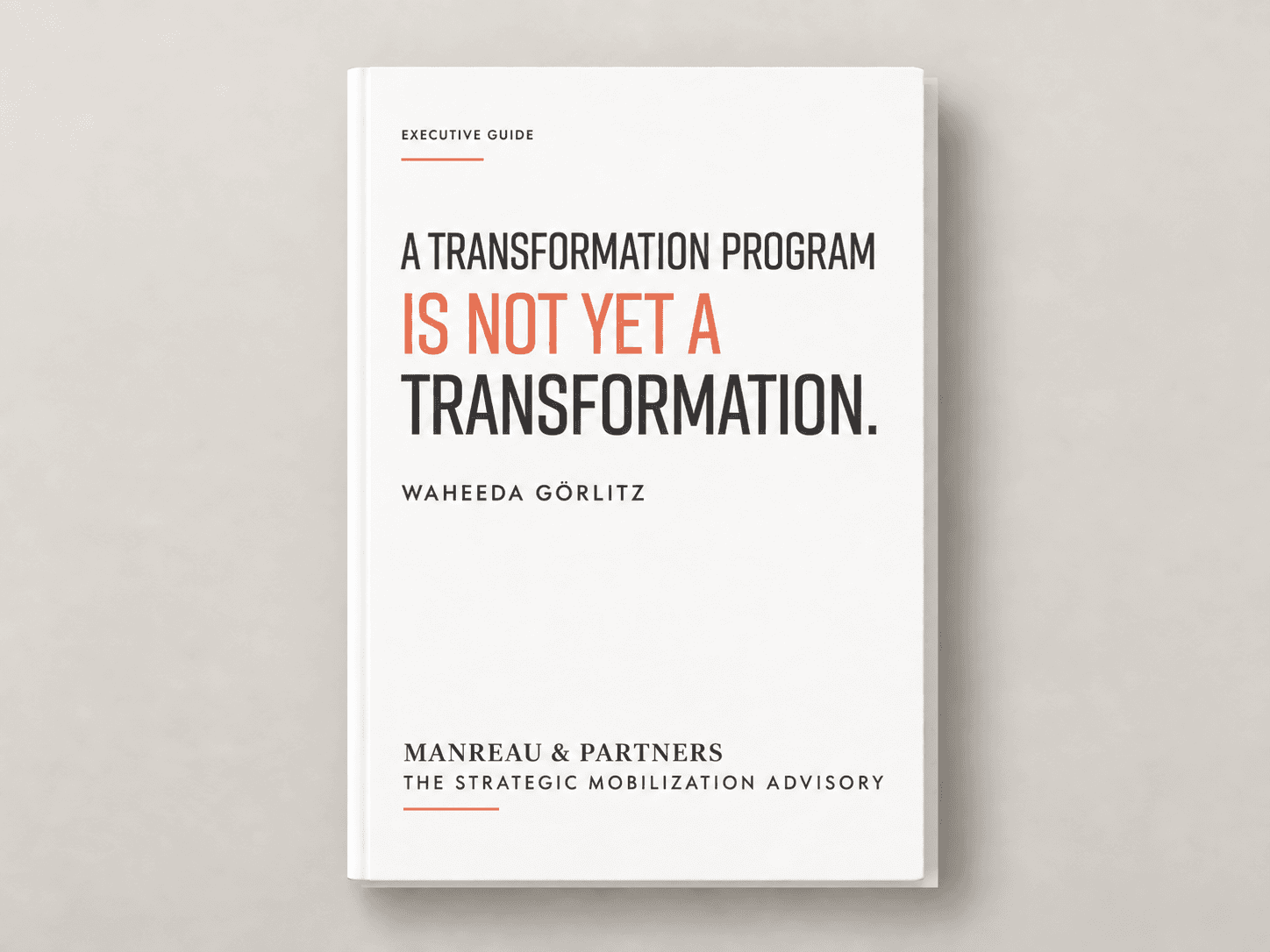
The white-cover Executive Guide A Transformation Program Is Not Yet A Transformation presented on a warm grey field

Why Transformations Still Fail

The Program Is Moving. The Transformation Is Not.

Thirty years of research shows that this happens even in well-run companies with sound strategies and capable teams, and rarely for the reason leadership assumes.

The Executive Guide presents the evidence, a practical test for whether it is happening in your organization now, and the questions a serious buyer should ask before accepting anyone’s answer, including ours.

Get The Executive Guide